

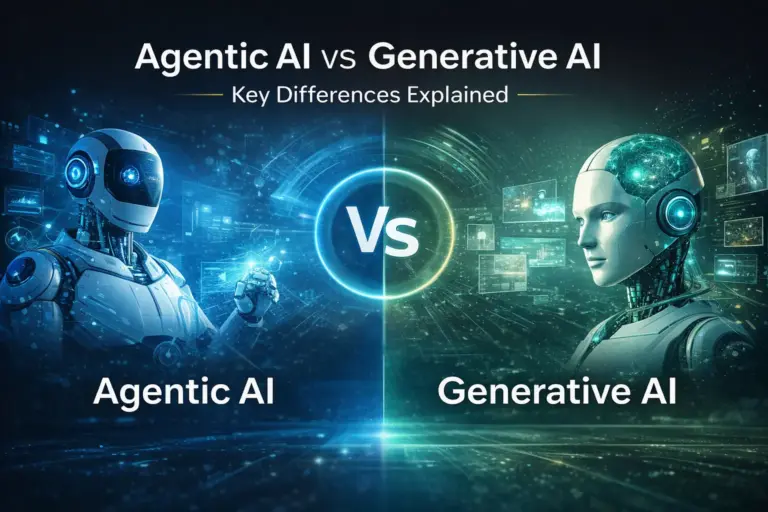
Agentic AI vs Generative AI: Key Differences Explained
Generative AI focuses on creating content such as text, images, code, and videos, whereas Agentic AI focuses on performing tasks autonomously by making decisions and executing actions to achieve a goal.
What is Generative AI?
Examples of Generative AI
Some well-known examples include:
- AI chatbots that generate human-like responses
- AI tools that create images from text prompts
- AI systems that write blog posts, emails, or code
- AI video and voice generation platforms
Common Use Cases
Generative AI is widely used in industries such as:
- Digital marketing and content creation
- Software development
- Customer support automation
- Media and entertainment
- Design and advertising
The main goal of Generative AI is content creation and assistance.
What is Agentic AI?
Key Capabilities of Agentic AI
Agentic AI systems can:
- Understand goals and objectives
- Break complex tasks into smaller steps
- Make decisions based on data
- Execute actions automatically
- Collaborate with other AI agents
This ability makes Agentic AI much more autonomous and powerful than traditional AI systems.
Real-World Examples
Generative AI Example
A marketer uses AI to generate blog content, social media captions, and ad copy.
Agentic AI Example
An AI agent automatically researches trending topics, writes blog posts, schedules social media posts, tracks analytics, and adjusts strategies without human involvement.
Why Agentic AI is the Next Big Trend
The Future of AI: Collaboration Between Humans and AI Agents
Conclusion
As AI continues to evolve, the combination of creative AI systems and autonomous AI agents will play a crucial role in building smarter and more efficient organizations. For students and professionals who want to build a career in this rapidly growing field, enrolling in a Gen AI Course In Hyderabad offered by Coding Masters can be a great opportunity to learn the latest AI tools, technologies, and real-world applications that are shaping the future of work.