

AI Resume Tips
Creating a strong AI resume requires more than just listing technical skills. Highlight your mastery of Python, machine learning, Generative AI, data analysis, NLP, or other AI tools in accordance with the specific job role. Focus on practical projects, and explain the problems you encountered, the technologies you applied, and the outcomes you delivered. Use quantifiable achievements whenever possible, such as improved model accuracy, reduced processing time, or successfully automated work tasks. Keep your resume concise, professional, and easy for both recruiters and ATS systems to scan. Include relevant certifications, internship experiences, GitHub-hosted projects, and professional portfolios. Tailor your resume for every AI position you apply to by aligning core keywords from the job description with your own background.
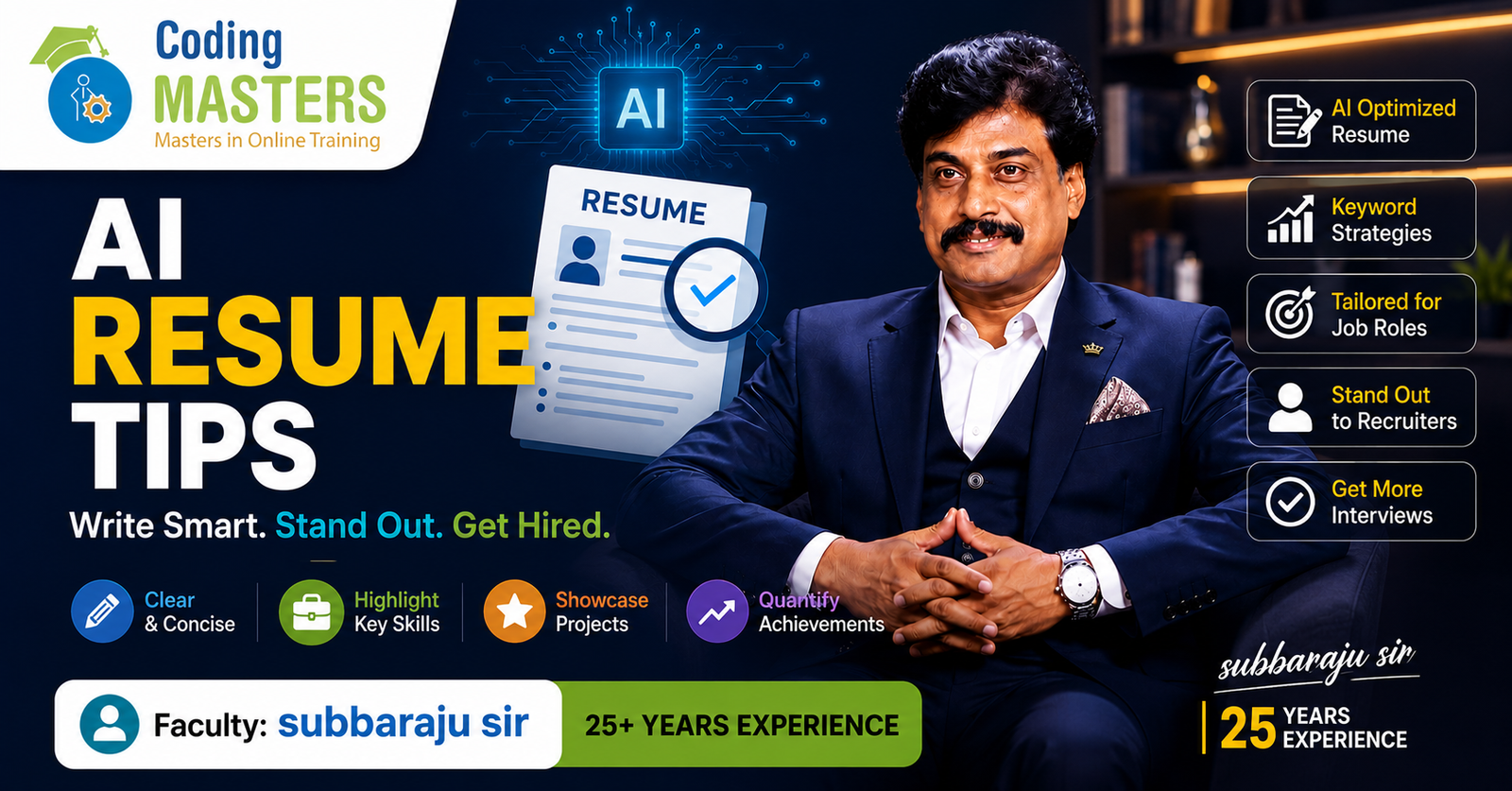
To write an AI position resume that helps you stand out from other job seekers, you must first clearly lay out the three most core elements. Missing any one of them may prevent recruiters from quickly determining whether you are a suitable candidate—these three elements are your technical capabilities, practical experience, and problem-solving skills. For whichever job you apply for, you must focus on writing matching core skills in line with that job’s requirements; you cannot submit the same set of skill lists to all positions. Hard skills common for AI positions, such as Python, machine learning, Generative AI, data analysis, NLP, deep learning, and various AI tools adapted to the target position, should be placed in a prominent spot on your resume so that the person reviewing your resume can spot them at a glance.
Build an ATS-Friendly AI Resume
An AI resume that can be identified by the ATS system helps recruiters quickly locate your job-matching skills and past experiences. This type of resume is formatted specifically to adapt to the recruitment-side screening system, allowing the system to read its content smoothly. After the person in charge of recruitment obtains the summarized resume information, they do not need to struggle to sift through scattered content, and can immediately pinpoint your abilities and experiences that align with the position.
Highlight AI Projects and Practical Skills
When you are looking for a job, you must carefully select the projects section of your resume, and pick several tangible, completed AI projects to include. These projects must genuinely prove that you are not only capable of memorizing the AI theories in textbooks, but can actually solve real problems encountered in reality, instead of presenting impractical, showy concepts that only exist on paper. After you have finalized which projects to include, you must describe each of them clearly, and cannot simply list the project name and stop there. You must explain each point one by one: what core goal you set out to achieve when you started the project, what specific technologies you used during the development process, what specific responsibilities you took on within the entire project team and what unique contributions you made, and what quantifiable results the project delivered after it was launched. Lay out the true value of the projects clearly in front of the resume reviewer.
Focus on Achievements and Relevant Experience
When writing your resume, do not merely list one by one the basic job duties you have performed. Focus instead on the tangible results you have actually delivered—results that make it immediately clear that you created concrete value in your previous positions. It is best to support these results with quantifiable figures, rather than vague self-praise. For example, you may write how much you improved the model’s accuracy, how much you shortened the system’s processing time, how you converted originally manual repetitive work into automated execution, or by what percentage you boosted overall work efficiency. In addition, you must include all of your internship experiences, obtained qualification certificates, freelance projects you have undertaken, and formal work experience relevant to the target position in your resume; do not omit these content items that can add to your competitiveness. Finally, remember that your resume must be concise and clear, its content must be updated at all times, and do not use an outdated resume from several years ago when applying for a position. Moreover, every section of your resume must align with the AI position you are applying for, and do not add any redundant information unrelated to this position.
Choose the Right AI Skills
When organizing your AI skills for your resume, do not pile up every single technology you have ever learned. Only list those that match the target position you are applying for. Among these position-relevant skills that you do include, they can specifically cover these categories: corresponding programming languages, machine learning frameworks, Generative AI tools, databases, cloud platforms, and data analysis methods.
Add Strong AI Project Descriptions
Having worked on AI projects can add significant weight to your resume. When you include these projects in your resume, HR will immediately recognize that you are not someone who only memorizes textbook theories—you can actually apply your professional expertise to real work tasks, which is far more effective than merely listing the technical knowledge you master. For every project you list on your resume, you must clarify four key details; missing any of them will prevent you from fully conveying the project’s value: what specific problem you were tasked with solving, what technologies you used during the project, what part of the overall project team you were specifically responsible for, and what final outcome the entire project achieved.
Optimize Your Resume for ATS
Nowadays, when many companies recruit employees, they will first use Applicant Tracking Systems to screen resumes, and only after that screening will recruitment specialists review them one by one. That is to say, the resume you submit will not first fall into the hands of recruitment staff; you must first pass the screening threshold of this system before your resume is likely to be seen by the people who are actually responsible for hiring and making final decisions. Want to make your resume smoothly proceed to the next stage? Just naturally integrate the relevant keywords from the job posting into your resume. Never stack these words together stiffly; instead, integrate these keywords into your own description of your experiences, so that they fit logically and do not feel out of place.
Highlight Certifications and Career Achievements
If you are applying for AI-related positions, including a relevant certificate on your resume can help you gain extra points. This advantage becomes even more prominent if you are a newcomer to the industry or a career switcher looking to transition into AI work. After all, unlike job seekers who have spent years in the industry and can present a long list of well-established project experiences to prove their competence, newcomers and career switchers rarely have hard credentials that directly meet the needs of AI position recruiters. A relevant certificate can help you fix this shortfall, making your resume stand out from a pool of applicants with similar backgrounds.
You can choose certificates related to machine learning, Generative AI, cloud computing, data science, or programming, all of which can be added to your resume. These are all core competence areas recognized by AI industry recruiters. Whether you are engaged in algorithm development, model training, or implementing AI technology into specific business operations, you cannot work without the knowledge support from these fields. Obtaining a certificate in these areas directly tells recruiters that you have already built a solid foundational skill set to enter the industry.
flat no 101, Bhavya Krishna Residency, OPP: Siddartha Degree College, Ameerpet Rd, Kumar Basti, Nagarjuna Nagar colony, Yella Reddy Guda, Hyderabad, Telangana 500073